
On this page
- Why Outdated Access Permissions Can Put Your Business at Risk
- What Should Businesses Do When an Employee Leaves?
- How Electronic Access Control Makes Managing Staff Access Easier
- Is It Time to Upgrade Your Business Access Control System?
- Improve Your Business Security with Sygma
- Frequently asked questions
Managing who can enter your business premises is an important part of maintaining security. However, as employees join, leave or change roles, keeping access permissions up to date can become increasingly difficult.
Lost access cards, forgotten entry codes and former employees retaining access to business premises can all create potential security risks. For businesses with multiple entrances, departments or locations, managing these changes manually can be particularly challenging.
So, how can businesses make sure only authorised people have access to their premises, and could an electronic access control system make the process easier?
Why Outdated Access Permissions Can Put Your Business at Risk
When an employee leaves a business, their access to company premises should be reviewed and removed where appropriate. However, this can easily be overlooked, particularly when access is managed through physical keys, shared codes or standalone entry systems.
Some of the common security risks include:
- Former employees retaining access: If keys, access cards or entry codes are not recovered or deactivated, former employees may still be able to enter the premises.
- Lost or stolen key fobs: Without a process for reporting and cancelling lost credentials, there is a risk that someone else could use them to gain entry.
- Shared access codes: Codes shared between multiple employees make it difficult to establish who has entered a building and can increase the risk of unauthorised access.
- Employees with unnecessary permissions: Staff who change roles or departments may retain access to areas they no longer need to enter.
- Inconsistent access across multiple sites: Businesses operating several premises may struggle to maintain an accurate record of who has permission to enter each location.
These issues can leave businesses with less control over their premises than they realise.
Make sure your business’ security systems are up to date, contact Sygma today for a free quotation.
What Should Businesses Do When an Employee Leaves?
Having a clear access management process can help reduce security risks whenever an employee leaves or changes position.
Consider introducing the following steps as part of your employee offboarding procedure.
1. Review and Remove Access Permissions
As part of the employee leaving process, identify every access method they have been issued. This could include physical keys, key fobs, access cards, PIN codes and permissions for restricted areas. Access should be removed promptly in line with your company’s offboarding and security procedures.
2. Recover Physical Access Devices
Request the return of any company-issued keys, fobs and access cards. If an item cannot be recovered, consider whether locks need changing or the associated electronic credential needs to be deactivated.
3. Change Shared Entry Codes
If employees have shared PIN codes or passwords, review whether these need changing when someone leaves. Regularly updating shared credentials can help prevent unauthorised access.
4. Update Access for Employees Changing Roles
Employees moving between departments or taking on new responsibilities may need different levels of access. Review their permissions to make sure they can enter the areas required for their role, without retaining unnecessary access elsewhere.
5. Keep an Accurate Access Register
Maintain a record of issued keys, access cards, fobs and permissions. This makes it easier to identify who has access to your premises and helps ensure that changes are not missed.
Need assistance with managing your commercial building’s access control? Get in touch to discuss Sygma’s security solutions.
How Electronic Access Control Makes Managing Staff Access Easier
Traditional keys and shared entry codes can make managing access difficult, especially as a business grows. Electronic access control provides a more flexible way to manage who can enter different areas of a building.
Depending on the system installed, businesses can benefit from several features.
Individual access credentials
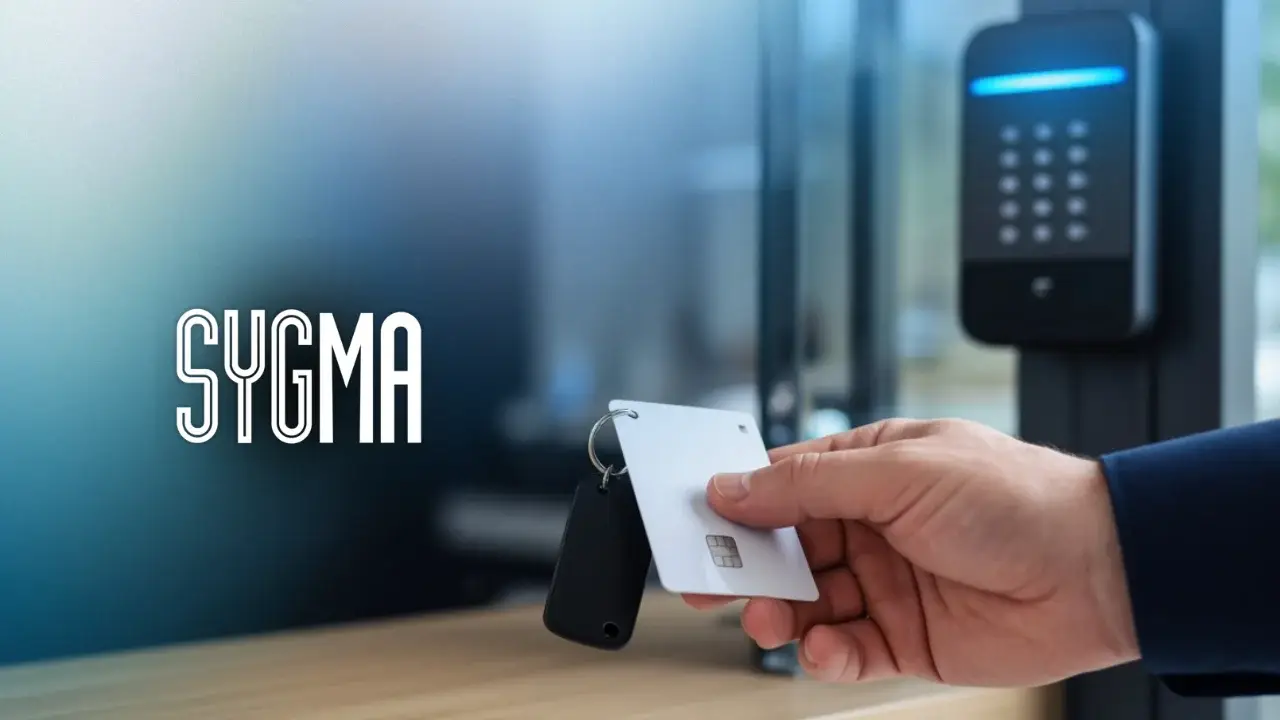
Employees can be issued with their own access cards, key fobs or other credentials. This means access can be assigned to individuals rather than relying on shared keys or codes.
Quickly deactivate lost or unwanted credentials
If an employee loses their fob or leaves the business, their individual credential can be deactivated without necessarily affecting other employees. This avoids the need to replace multiple physical keys or change a shared code across an entire building.
Different access permissions
Access can be restricted according to an employee’s role, department or working requirements. For example, certain employees may need access to offices, server rooms, storage areas or other restricted parts of a building.
Access logs and activity records
Depending on the system, electronic access control can provide records of access activity, helping businesses review when credentials have been used and investigate potential security concerns.
Simplified multi-site management
For businesses operating across multiple locations, suitable systems can help centralise access management, making it easier to oversee permissions and manage staff changes across different premises.
Is It Time to Upgrade Your Business Access Control System?
If your business still relies heavily on physical keys, shared PIN codes or outdated entry systems, it may be worth reviewing whether your current arrangements are providing sufficient control. This is particularly relevant for businesses with high employee turnover, multiple departments, restricted areas or several commercial premises.
An access control upgrade can help simplify staff onboarding and offboarding, improve visibility of who can enter your buildings and reduce the administrative burden of managing physical access.
The right solution will depend on your building layout, security requirements and how your business operates. A professional assessment can help identify suitable options, whether you need a completely new installation or an upgrade to your existing system.
Improve Your Business Security with Sygma
Keeping track of who has access to your premises should not be an ongoing headache. With the right electronic access control system, businesses can manage staff permissions more efficiently, respond quickly to lost credentials and maintain greater control over their buildings.
Sygma provides commercial access control installation and maintenance services, helping businesses protect their premises and manage building access.
Whether you are looking to install a new system, upgrade existing equipment or introduce access control across multiple sites, our team can help you find a solution suited to your requirements.
Common questions
Frequently asked questions
What happens if an employee loses their access fob?
If an employee loses their access fob, it should be reported immediately so the associated credential can be deactivated. A replacement can then be issued. Electronic access control systems allow individual credentials to be managed without necessarily changing access for everyone else.
Can a former employee still access a building using their old key fob?
Potentially, yes. If their access credentials have not been deactivated, they may still be able to enter the premises. Businesses should include access removal as part of their employee offboarding process to prevent former employees retaining unnecessary access.
How often should business access permissions be reviewed?
Access permissions should be reviewed whenever an employee joins, leaves or changes roles. It is also good practice to carry out periodic reviews to identify outdated permissions, unused credentials and employees who may have access to areas they no longer require.
Can different employees have access to different areas of a building?
Yes. Electronic access control systems can be configured to provide different levels of access depending on an individual's role or responsibilities. This allows businesses to restrict entry to sensitive areas while ensuring employees can access the facilities they need.
Can access control systems manage multiple business locations?
Yes. Suitable access control systems can allow businesses to manage permissions across multiple premises. Depending on the system, administrators may be able to manage credentials and review access activity centrally, reducing the need to manage each site independently.
Is electronic access control better than traditional keys?
Electronic access control offers greater flexibility when managing staff access, particularly for businesses with multiple employees or locations. Lost credentials can often be deactivated individually, permissions can be changed without replacing physical locks, and some systems provide access activity records. The most suitable option depends on the security requirements and layout of the premises.