SSAIB Accredited Installer
Surveyed, designed and installed for commercial premises. From a single office to a large multi-site organisation, Sygma delivers tailored surveillance systems that deter crime, monitor activity and capture the evidence you need, installed in line with UK data protection law.
Commercial CCTV Installation
Our service covers the survey, design, installation and commissioning of your commercial CCTV system. Here are the steps taken by our security systems team:
Every installation begins with a full site survey to assess your premises, identify the key coverage areas and understand your specific security requirements. Once the system has been agreed, a quotation is provided.
Our CCTV installation team will then attend your commercial premises to:
Design a system around your building, its coverage areas and the security requirements identified during the survey.
Install cabling and power supplies for the cameras, recording equipment and network hardware.
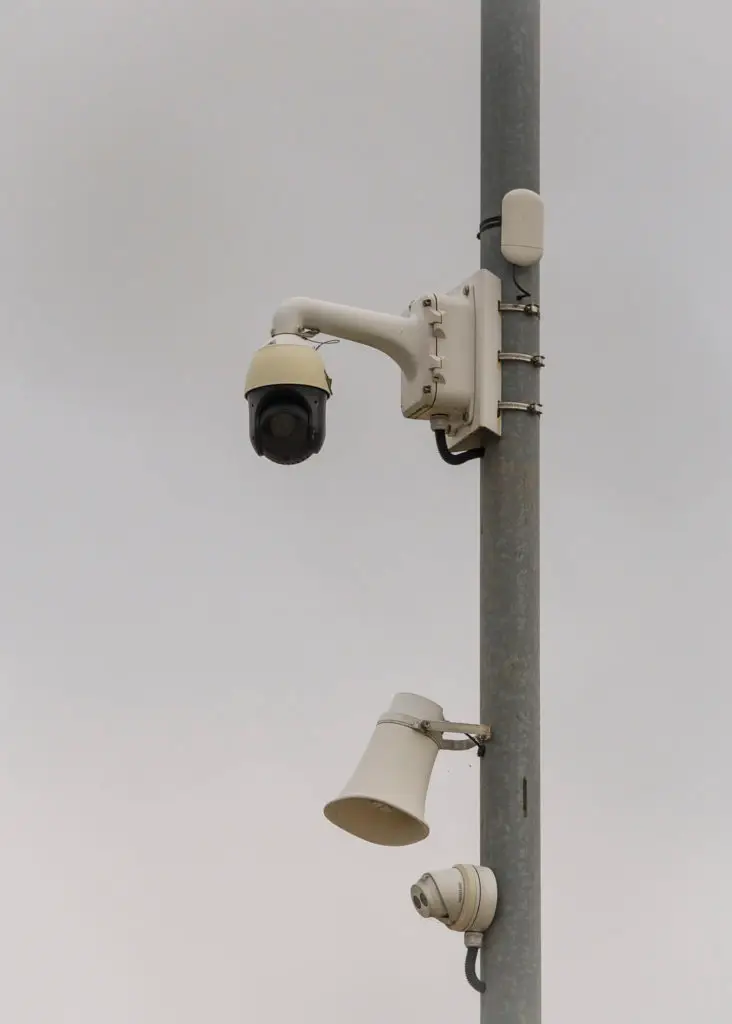
Mount and position each camera to cover the entrances, perimeter and high risk areas set out in the design.
Install and configure the recorder and storage, and set up remote viewing for authorised users.
Integrate the system with access control, intruder alarms or building management systems where required.
Carry out full testing and commissioning across every camera and recording channel.
Hand over the system with training for your team, plus the signage and documentation you need for data protection compliance.
System Types
Cameras can be utilised in a variety of applications and can often save significant amounts of capital expenditure when set against traditional, labour intensive solutions. There are many reasons to install cameras around your business premises which go beyond providing a deterrent against criminal or reckless behaviour.
ANPR cameras monitor vehicle entry and exit, enhance site security, and provide real-time alerts when authorised clients or deliveries arrive on site.
Analytic-enabled CCTV systems track footfall, movement patterns, and behaviour, delivering valuable data to support marketing, sales, and operational decisions.
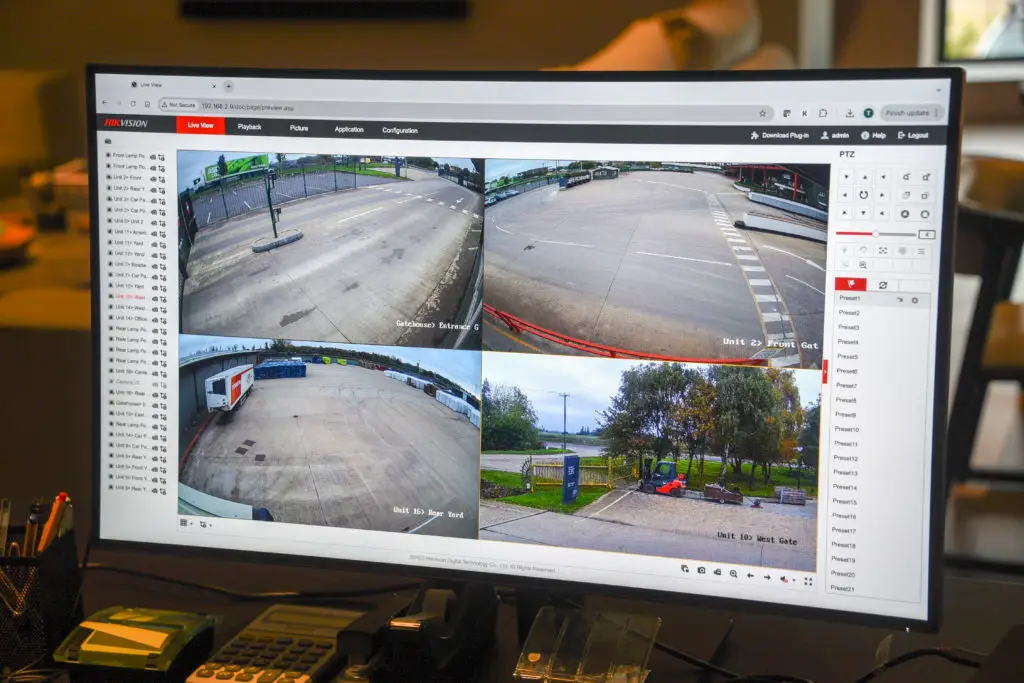
Remotely monitored systems provide professional oversight when your premises are unoccupied. Trained operators can respond to incidents, assist visitors, and deter criminal activity without the need for on-site security staff. Read about remote CCTV monitoring.
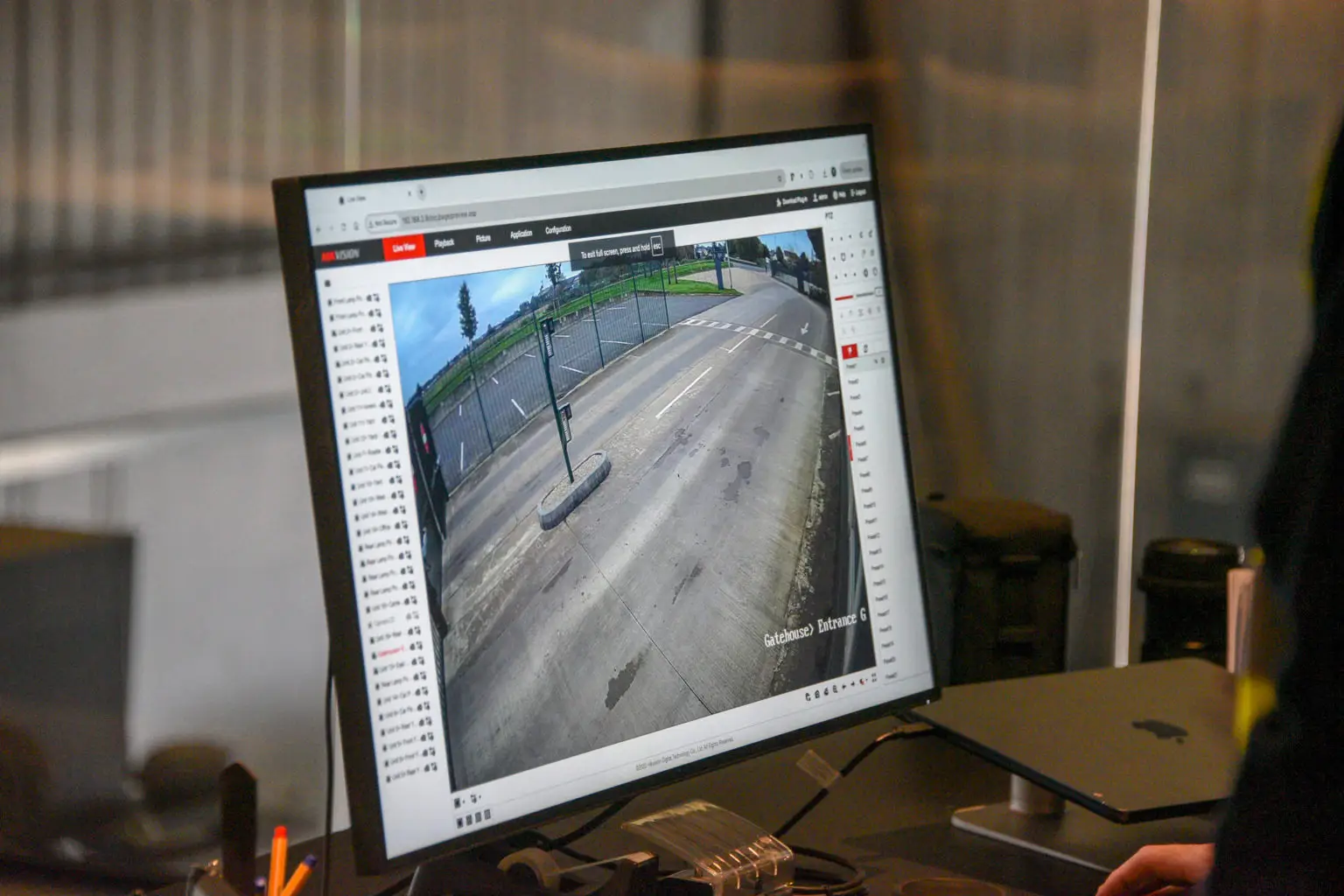
IP cameras send video over your existing wired or wireless network, removing the need for separate cabling. Footage can be reached from any authorised machine on the network or over the internet, and stored on a networked recorder or server.
Why Choose Sygma?
With over two decades of experience in commercial security systems, Sygma's team of engineers is fully equipped to deliver professional and reliable CCTV installations. Let our team ensure your premises is protected with a compliant, secure CCTV solution.
Get a Free QuoteIP CCTV Systems
IP (Internet Protocol) technology has revolutionised how data is transmitted over networks, providing every device with a unique identification address. Today, IP is the standard for offices, retail, industrial and leisure sites, especially with the rise of mobile and smart devices.
IP CCTV (Internet Protocol Closed-Circuit Television) uses existing wired or wireless TCP/IP networks to transmit video, eliminating the need for separate cabling. This makes installation faster, more efficient and more cost-effective. IP cameras can be accessed via the network or the internet, with recordings stored on a networked PC or server. Many IP cameras can also connect directly to a router-enabled broadband connection, requiring no dedicated PC for operation. Designed with minimal moving parts, IP cameras are highly reliable and durable.
In corporate environments, IP surveillance systems offer significant long-term savings. Security cameras can often integrate with existing IT infrastructure, or run securely on a separate VPN if needed. Remote monitoring allows organisations to manage security centrally without relying on on-site staff, ensuring critical footage is preserved and easily shared with authorities when required. Where structured cabling is needed first, our data network services team can put the infrastructure in place.
Upgrading
Moving from analogue to IP brings your surveillance onto the same infrastructure as the rest of your business, and changes what the system can do for you.
IP CCTV systems use existing network infrastructure, removing the need for separate cabling. This simplifies setup and reduces installation costs, allowing businesses to deploy cameras quickly without disrupting operations. IP cameras are typically plug-and-play, meaning minimal technical expertise is required to get your system up and running.
With IP surveillance, security footage can be accessed anytime, anywhere via the network or internet. This enables businesses to monitor multiple sites remotely, respond to incidents in real time, and securely store evidence without relying on on-site staff. Remote access also supports scalability, allowing new cameras to be added easily as your security needs grow.
IP cameras are durable, low-maintenance, and designed with fewer moving parts, ensuring long-term reliability. Over time, IP CCTV systems prove more cost-effective than traditional analogue setups, as they reduce manual monitoring, minimise infrastructure expenses, and integrate seamlessly with existing IT systems.
Commercial CCTV Benefits
With a network camera you can monitor high-security entrances, track personnel or verify false alarms at your store from any location. A network camera offers all the functionality of a traditional analogue CCTV camera, but with greater flexibility and lower costs, and access can be restricted to authorised personnel only.
If a building already has an IP network, the infrastructure is in place to add network cameras with minimal effort.
Key advantages include:
Applications
Recent advances allow cameras to connect directly to an IP-based computer network, so live video can be viewed from one location while the camera operates somewhere else entirely. Here is how commercial organisations put that to work.
Network cameras are used in professional security systems and enable live video to be viewed remotely by authorised personnel. Video of high-risk locations such as buildings, casinos, banks and shops can be monitored from control rooms, police stations and by security managers across a variety of sites.
CCTV for Law EnforcementNetwork cameras are easily connected to the existing IP network and enable real-time updates of high-quality video to be accessible from any computer on that network. Sensitive areas such as server rooms and reception areas can be closely monitored in a cost-effective way.
CCTV for Care HomesHospitals, clinics and treatment centres use network cameras to keep entrances, car parks and restricted areas under watch without adding security staff, while keeping footage under the tight access controls that patient environments demand.
CCTV for HealthcareNetwork cameras enhance the monitoring of a retail location by ensuring that everything is in good order. You can monitor your site from wherever you are in the world. Placed over a service desk, you can see and hear staff and customer interactions, making monitoring customer service easy and objective.
CCTV for Retail PremisesA network camera is a convenient way to monitor the office. Areas like the reception area and conference rooms can be monitored for activity. A camera linked to an access control system can be controlled from your desk to greet, check and authorise visitors.
CCTV for Car DealershipsNetwork cameras can be used in the manufacturing industry to monitor robots, machines and production lines from the office or from home. Service engineers can access the cameras remotely, and pan tilt zoom cameras enable both all-inclusive and detailed views.
CCTV for Schools & UniversitiesCompliance
It is a legal requirement in the UK that CCTV must be operated in accordance with Data Protection and Human Rights legislation, including UK GDPR. That applies from the moment a camera is switched on, which is why we design coverage, storage and retention into the system rather than leaving it to be sorted out later.
The following guidelines must be followed when using CCTV security systems on commercial premises.
Get a Free SurveyUse CCTV for reasonable, justifiable purposes only, informing people what those purposes are and that you are recording them on site.
Ensure your system is continually maintained as fit for purpose, so that the footage it produces is usable when you actually need it.
Make images available to the people in them if requested, and where it is reasonable to do so.
Keep images securely stored, with the only copies downloaded being for police and archive purposes, and do not keep them for longer than necessary.