
On this page
- What Is an Electrical Installation Condition Report (EICR)?
- How Often Does a Commercial Property Need an EICR?
- What Happens If a Commercial EICR Is Unsatisfactory?
- What Should Businesses Do After an Unsatisfactory EICR?
- Why Regular Commercial Electrical Inspections Matter
- Commercial Electrical Inspection and Maintenance from Sygma
- Frequently asked questions
Electrical safety is an important responsibility for every business. From offices and warehouses to retail premises and industrial buildings, maintaining safe electrical installations helps protect employees, visitors, customers and property.
One of the most effective ways to assess the condition of a building’s electrical installation is through an Electrical Installation Condition Report (EICR).
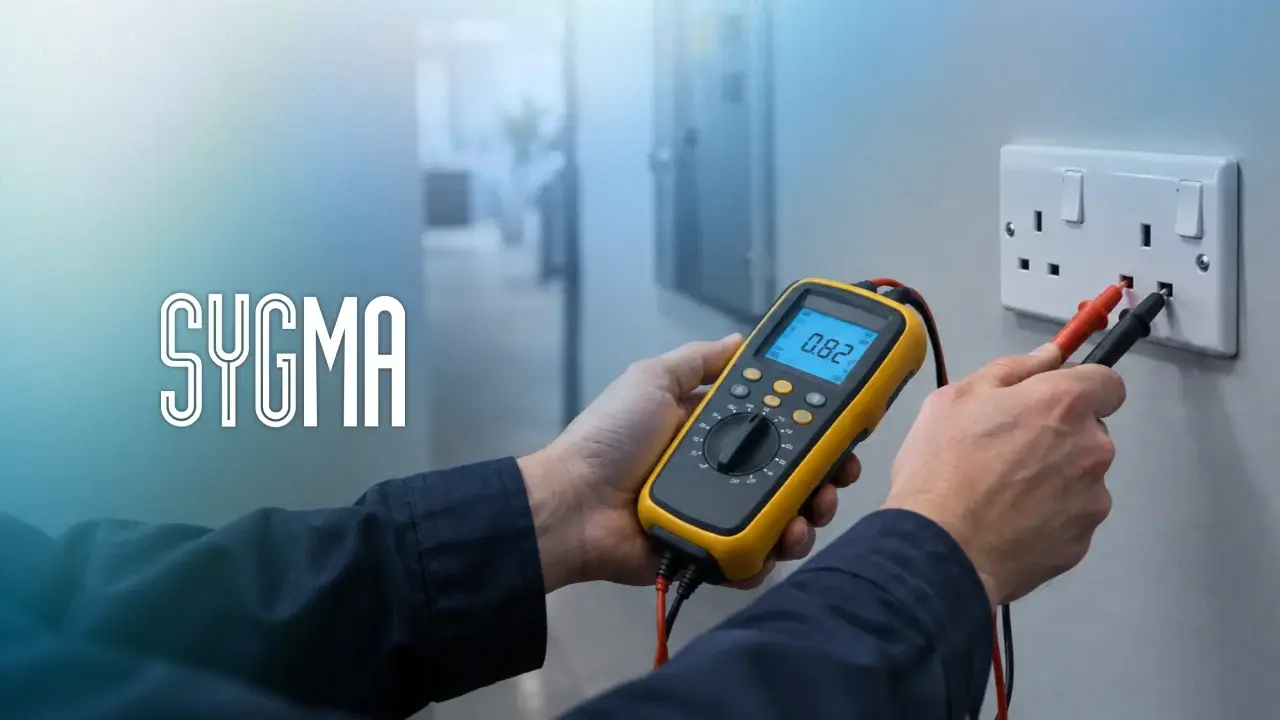
Often referred to as fixed wire testing, an EICR involves inspecting and testing the fixed electrical systems within a property to identify damage, deterioration and potential safety issues.
But what exactly does a commercial EICR involve, how often should your business arrange one, and what happens if the inspection identifies problems?
What Is an Electrical Installation Condition Report (EICR)?
An Electrical Installation Condition Report is a formal assessment of the condition and safety of a property’s fixed electrical installation.
The inspection is carried out by a competent electrical professional and assesses whether the installation is suitable for continued use.
An EICR typically examines:
- Electrical distribution boards: Checking the condition of consumer units, distribution boards and protective devices.
- Fixed wiring: Assessing visible wiring for signs of damage, deterioration or potential safety issues.
- Sockets and switches: Inspecting electrical accessories for damage, wear and suitability.
- Earthing and bonding: Checking that appropriate earthing and bonding arrangements are in place to help protect against electric shock.
- Protective devices: Testing equipment designed to disconnect the electrical supply when a fault occurs.
- Electrical circuits: Carrying out appropriate tests to assess the condition and safety of the installation.
Following the inspection and testing, the electrician produces a report documenting their findings, any identified issues and the overall condition of the installation.
An EICR relates to the fixed electrical installation. It is different from Portable Appliance Testing (PAT), which assesses individual portable electrical appliances.
How Often Does a Commercial Property Need an EICR?
Businesses have a responsibility to ensure their electrical installations are maintained in a safe condition.
The Electricity at Work Regulations 1989 require electrical systems to be maintained, so far as reasonably practicable, to prevent danger. However, the regulations do not specify a fixed inspection interval or make an EICR mandatory by name.
Industry guidance commonly recommends the following inspection intervals:
- Offices and shops: Typically every five years.
- Industrial premises: Typically every three years.
- Other specialist environments: Intervals depend on the type of premises, electrical installation and operating conditions.
These are general recommendations rather than universal legal deadlines. The appropriate inspection frequency should be determined by a competent person, taking into account the age, condition and use of the installation, previous inspection findings and any relevant insurance or contractual requirements.
An additional inspection may also be advisable when taking responsibility for new commercial premises, particularly where the condition of the existing electrical installation is unknown.
Keeping track of inspection dates and arranging assessments at appropriate intervals can help businesses manage their electrical safety responsibilities.
What Happens If a Commercial EICR Is Unsatisfactory?
An EICR will identify any defects or observations found during the inspection and assign classification codes according to their significance.
Understanding these codes helps businesses determine which issues need urgent attention and which are recommendations for improvement.
The main classification codes include:
C1 – Danger Present
This indicates an immediate danger that presents a risk of injury. Immediate action is required to remove the danger or make the installation safe. The electrician should take appropriate action where reasonably practicable and communicate any remaining danger clearly.
C2 – Potentially Dangerous
This identifies a potentially dangerous condition that requires urgent remedial action to prevent a risk to people using the electrical installation.
C3 – Improvement Recommended
This indicates that an improvement would be beneficial but the observation does not, by itself, make the overall report unsatisfactory.
FI – Further Investigation Recommended
This indicates that further investigation is advised to establish the nature or extent of an identified issue. Under the current BS 7671:2018+A4:2026 classification approach, an FI observation does not by itself result in an unsatisfactory report.
An installation containing C1 or C2 observations will be classified as unsatisfactory. Businesses should take the findings seriously and arrange the necessary remedial work promptly.
What Should Businesses Do After an Unsatisfactory EICR?
Receiving an unsatisfactory EICR does not necessarily mean an entire electrical installation needs replacing. In many cases, specific faults or individual components can be repaired or upgraded to address the issues identified.
The important thing is to understand the findings and establish a clear plan for putting them right.
Businesses should consider the following steps:
1. Review the inspection report
Go through the observations and classification codes with the inspecting electrician. Make sure you understand which issues require immediate attention and which need further investigation.
2. Prioritise safety-critical work
Any C1 findings should be addressed immediately, with appropriate action taken to make the installation safe. C2 findings also require urgent remedial attention.
3. Arrange remedial electrical work
Obtain a quotation for the necessary repairs or improvements. Depending on the findings, this could involve replacing damaged wiring, upgrading distribution boards, improving earthing arrangements or replacing faulty electrical components.
4. Plan any necessary disruption
For larger commercial premises, electrical remedial work may need to be coordinated around business operations. Consider access requirements, potential power interruptions and the impact on employees, customers and other building users.
5. Obtain confirmation of completed work
Once remedial work has been completed, make sure the appropriate certification and documentation are provided. Depending on the work undertaken, this may include electrical installation certificates or minor electrical installation works certificates, alongside any further inspection or testing required.
Keeping these records together with the original EICR helps demonstrate that identified issues have been addressed.
Why Regular Commercial Electrical Inspections Matter
Electrical faults can develop gradually, particularly in older buildings or premises where installations are subject to heavy use.
Without appropriate inspection and maintenance, deterioration may go unnoticed until it causes equipment failure, disruption or a safety incident.
Regular electrical inspections can help businesses:
- Identify potential electrical hazards before they develop into more serious problems.
- Understand the condition of existing electrical installations.
- Plan repairs and upgrades before unexpected failures occur.
- Support their electrical safety management responsibilities.
- Maintain accurate records of inspections and remedial work.
- Reduce the likelihood of disruption caused by preventable electrical faults.
For businesses managing multiple commercial premises, maintaining a consistent inspection schedule can also make it easier to monitor compliance, coordinate contractors and plan maintenance expenditure across their property portfolio.
Commercial Electrical Inspection and Maintenance from Sygma
Maintaining safe electrical installations is an ongoing responsibility, not something that should only be considered when problems arise.
Whether you manage a single commercial building or multiple sites, understanding the condition of your electrical infrastructure is an important part of protecting your premises and keeping your business operating safely.
Sygma provides commercial electrical services to businesses across the UK, helping organisations maintain and improve their electrical installations.
If your premises are due an electrical inspection, or you have received an EICR highlighting issues that need attention, speak to our team about your requirements.
Common questions
Frequently asked questions
What does EICR stand for?
EICR stands for Electrical Installation Condition Report. It is a formal report produced following an inspection and testing of a property's fixed electrical installation to assess its condition and suitability for continued use.
Is an EICR a legal requirement for commercial properties?
There is no blanket legal requirement for every commercial property to have an EICR at a specific interval. However, the Electricity at Work Regulations 1989 require electrical systems in workplaces to be maintained to prevent danger, so far as reasonably practicable. Regular inspection and testing are an important part of demonstrating that electrical safety is being managed appropriately.
How long does a commercial EICR inspection take?
The time required depends on the size of the premises, the number of electrical circuits and distribution boards, the complexity of the installation and the extent of testing required. Larger commercial and industrial buildings may require more than one visit to complete the inspection.
What happens if my commercial EICR fails?
An unsatisfactory report means that issues requiring remedial attention have been identified, typically C1 or C2 observations. These should be discussed with the inspecting electrician, prioritised according to risk and addressed through appropriate remedial electrical work. Further investigation may also be advised where necessary.
Does an EICR include PAT testing?
No. An EICR assesses the fixed electrical installation, including wiring, distribution boards, sockets and associated protective devices. PAT testing is a separate process that assesses the safety of portable electrical appliances.
Can an existing commercial electrical installation pass an EICR if it is older?
Yes. An older electrical installation can still receive a satisfactory report if it is in a suitable condition for continued use. An EICR assesses the condition and safety of the installation, rather than simply whether every component meets the latest standards. Any identified safety concerns will be recorded and classified accordingly.
Who can carry out a commercial EICR inspection?
An EICR should be completed by a competent electrician with the appropriate knowledge, experience and qualifications to inspect and test the type of electrical installation involved. Commercial installations can be complex, so it is important to appoint someone suitably experienced in this type of work.