Sygma Fire, Security & Electrical
Designed, installed and commissioned to BS 5839-1. From single-zone conventional panels to large-scale addressable networks, Sygma delivers fire alarm systems engineered around your building, your risk profile and your budget.
How It Works
Our service includes the design, fitting and installation of your new commercial fire alarm system.
Our fire system designers will survey your building and discuss objectives regarding the output of your fire system. After agreeing on a system that meets the requirements and objectives set out in your fire risk assessment, a quotation will be provided.
Install system cabling and provide power supplies to control and indicating equipment in accordance with the design specification drawings.
Install the Fire Alarm Control Panel and carry out insulation resistance testing to verify cable integrity and continuity.
Install device mounting bases and terminate all field wiring connections.
Energise the system and perform initial checks to confirm all devices are correctly connected and communicating with the control panel.
Undertake cause and effect programming in line with the system design.
Commission the system, ensuring full operational functionality prior to client handover.
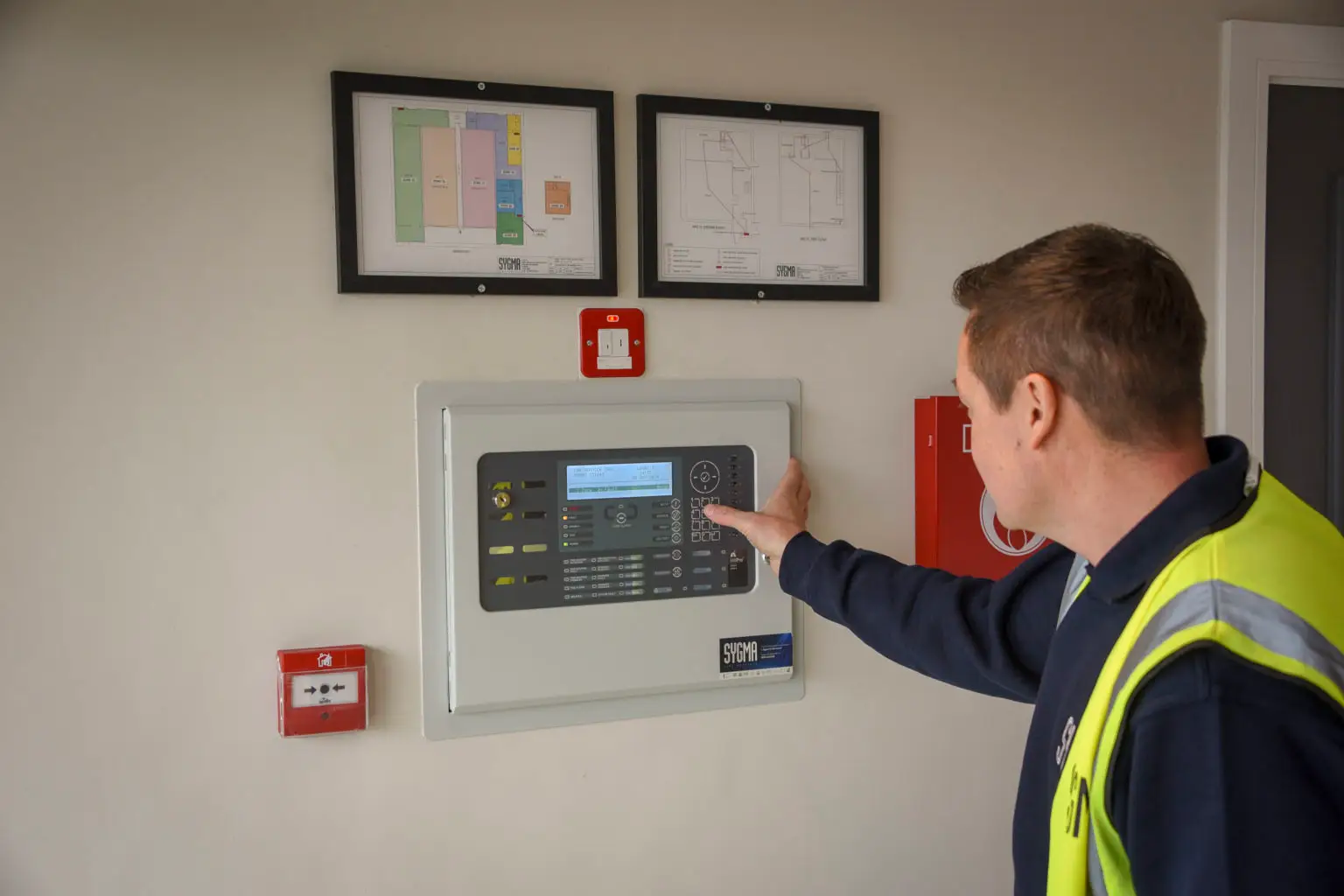
Install zone plans and produce all required documentation in accordance with relevant British Standards.
Why Choose Sygma?
Fire detection and alarm systems are almost all electrical, so it pays to use an installer that knows both BS 5839 and BS 7671. Sygma holds the BAFE SP203-1 accreditation for the installation of fire detection and alarm systems, along with all the necessary electrical certifications from the NICEIC, so we can handle every stage of the installation, including the power to the main fire alarm panel.
We are also an approved contractor with SafeContractor, CHAS and Constructionline.
Compliance
In England and Wales, the Responsible Person must carry out a fire risk assessment, implement appropriate fire precautions, and ensure fire detection and alarm systems are suitable for the building and its use.
Recommendations for the design, installation, commissioning and maintenance of fire detection and fire alarm systems in non-domestic premises. It is a key standard for commercial fire alarm systems.
Applies to non-domestic premises in England and Wales. It requires the Responsible Person to carry out a fire risk assessment, implement appropriate fire safety measures, and maintain those measures, including fire detection and alarm systems where required.
A product standard series covering components used within fire detection and fire alarm systems, including:
Places a duty on employers to ensure, so far as is reasonably practicable, the health, safety and welfare of employees and others who may be affected by their operations, including appropriate fire safety arrangements.
Commercial Fire Alarm Maintenance
Regular commercial fire alarm servicing is essential for compliance with fire safety regulations and legislation; inspections are required every six months. This regular maintenance ensures your detection system is reliable and fully operational. Routine repairs may include replacing batteries, rewiring, swapping out faulty components, and adjusting and recalibrating system settings.
Commercial Fire Alarm Installation
When considering the installation of a commercial fire alarm system, several key factors can impact the overall cost.
Larger buildings require more devices and complex installation processes.
Existing wiring, building layout, and additional features like emergency lighting.
Meeting standards such as BS 5839 requires specialised equipment and professional services.
Different fire alarm system types have their own advantages and price ranges.