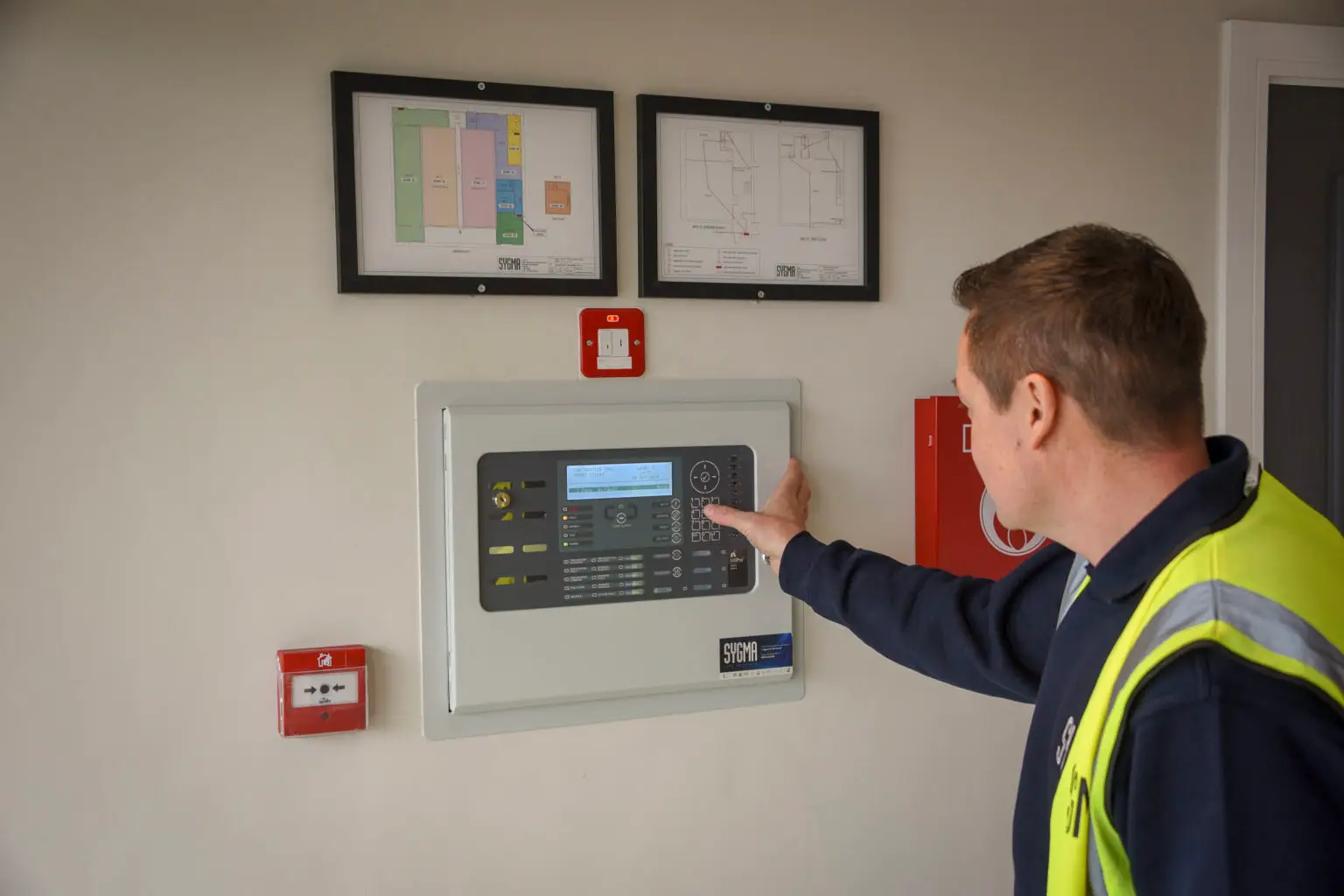
Commercial Fire Alarm Installation
At Sygma, we specialise in commercial fire alarm installation across the UK. As a BAFE-certified company, we ensure every system is installed and commissioned to the highest industry standards. Our team of qualified fire safety engineers provides expert installation, servicing, and maintenance of a wide range of commercial fire detection and alarm systems, helping to protect lives, property, and business continuity. Whether you need a new commercial fire alarm system or upgrades to existing equipment, Sygma delivers reliable, compliant, and cost-effective solutions tailored to your premises.
Fire Alarm Installation Process at Sygma
Our service includes the design, fitting and installation of your new commercial fire alarm system. Here are the steps taken by our fire alarm system team:
- Fire System Designers will survey your building and discuss objectives regarding the output of your fire system. After agreeing on a commercial fire alarm system that meets the requirements and objectives set out in your fire risk assessment, a quotation will be provided.
Our fire alarm installation team will then return to your commercial building to:
- First fix the system cabling and provision of power to the control and indicate equipment located as per the specification drawings set out during the design.
- Install the Fire Alarm Control Panel and insulation test for cable continuity.
- Install device mounting bases and termination of cables Second fix of detection and alarm devices.
- Energise the circuits and conduct system checks to ensure all devices are connected to the master panel.
- Conduct cause & effect programming.
- Conduct commissioning of the system in preparation for handover to the client.
- Install zone plans and produce documentation in accordance with the British Standards recommendations.
Fully Qualified for Total Peace of Mind
To ensure that your commercial fire alarm system is fully compliant with UK law, it is strongly recommended that businesses work with installers that have a strong understanding of British Standard BS 5839 and are able to design and install a fire alarm system that meets these requirements. As fire detection and alarm systems are (almost all) electrical systems, it is also recommended that you choose an organisation fully qualified in meeting the requirements of BS 7671 & the IET wiring regulations. At Sygma, we hold the BAFE SP203-1 accreditation in the installation of fire detection and alarm systems along with all the necessary electrical certifications from the NICEIC, which means we can handle all stages of the installation, including the provision of suitable electrical installation and power to the main fire alarm panel. You can rest easy knowing you and your business are fully protected.
We are also an approved contractor by SAFEContractor, CHAS and ConstructionLine. This ensures that our commercial fire alarm system installation team works to the latest standards, regulations and certifications. Our long list of accreditations demonstrates Sygma’s commitment to providing the highest commercial fire alarm installation standards.
Commercial Fire Alarm Regulations, Make Sure Your Business is Compliant
Regulations state that business owners must take ‘appropriate’ action to prevent fires from occuring, limiting the time taken to identify a live fire incident, eliminate the blaze, evacuate the commercial building safely, and notify the emergency services.
All Commercial Fire Alarm Systems must comply with the following UK government regulations to ensure maximum safety and effectiveness:
1. British Standard BS 5839
This standard provides guidance on planning, insulation, commissioning and the maintenance of fire detection and alarm systems. The standard focuses on commercial properties, so is essential for business owners to understand.
2. The Regulatory Reform Order (RRO) 2005
The RRO applies to all non-domestic properties. It emphasises the importance of conducting fire risk assessments and implementing appropriate fire safety measures – which include fire detection and alarm systems.
3. BS EN 54
This regulation covers 27 various components of commercial fire alarm systems, including:
- control panels
- sounders
- power supplies
- heat detectors
- smoke detectors
- flame detectors, and more
4. Health and Safety at Work
This act places responsibility on employers or business owners to ensure, as reasonably as possible, the health, safety, and welfare of all employees at their business, including fire safety.
Commercial Fire Alarm Maintenance
Regular commercial fire alarm servicing is essential for compliance with fire safety regulations and legislation; inspections are required every six months. This regular maintenance ensures your detection system is reliable and fully operational.
It’s important to hire a qualified technician or engineer to service your fire alarm systems bi-annually to meet the standards outlined in BS5839-1.
Routine repairs performed by an engineer may include:
- Replacing batteries
- Rewiring
- Swapping out faulty components
- Adjusting and recalibrating system settings
- Ensuring your fire alarm system is well-maintained not only keeps you compliant but also enhances safety for everyone.
Cost of Commercial Fire Alarm Installation
When considering the installation of a commercial fire alarm system, several key factors can impact the overall cost. The cost will depend on the type of fire alarm system you choose. Each type has its own advantages and price range. Businesses with larger buildings typically require more devices and complex installation, which can significantly increase costs. Factors such as the building layout, existing wiring, and any additional features (like emergency lighting) can influence installation costs. Meeting specific regulations, such as BS5839, may require additional investment in equipment and professional services to ensure compliance and appropriately protect your business.
Receive Your Free Quote for Commercial Fire Alarm Installation
Contact Sygma now for expert advice on commercial fire alarm systems tailored to your business.
Frequently Asked Questions About Commercial Fire Alarm Installation
Do all commercial properties need a fire alarm?
Yes, hiring a qualified technician or engineer for your business is essential for ensuring proper installation. Professionals ensure that your system complies with safety regulations and standards, such as BS5839, and that it is tailored to meet the needs of your commercial property.
Do I need a fire alarm certificate in the UK?
While there isn’t a standalone “fire alarm certificate” legally required by name, you do need proper evidence that your commercial building’s fire alarm system complies with UK fire regulations, which is vital for being legally compliant under the broader Regulatory Reform (Fire Safety) Order 2005. Sygma can provide compliant documentation following a commercial fire alarm installation, we can also provide design certificates, maintenance completion certificates and document maintenance visits in a fire alarm log book, which all helps to provide evidence that your commercial fire system is legally compliant. Failure to maintain these forms of evidence could result in fines (up to £5,000 for minor breaches, or unlimited fines for serious negligence), enforcement notices or even business closure in extreme cases and increased insurance costs or loss of coverage. Speak to the team today to make sure you’re on the right side of the fire safety laws.
What are the fire regulations for commercial buildings?
In 2025, an update to BS 5839 outlined some crucial changes to fire safety standards for businesses. You can explore the full implications of these changes in our blog post, UK Fire Alarm Regulation in the Workplace 2025: Everything You Need to Know.
How often should my fire alarm system be tested?
Fire alarm systems in commercial properties should be tested weekly to ensure functionality. Download our free Commercial Fire Alarm Maintenance Checklist to ensure you are getting the best out of system. Additionally, regular professional maintenance visits should be scheduled for at least twice a year to identify and resolve any issues.
What kind of maintenance is required for commercial fire alarm systems?
Routine maintenance should include checking for wear and tear on devices, replacing batteries, testing alarms, and ensuring all components are in working order. Regular servicing by professionals is vital for compliance with regulations and for addressing potential problems before they escalate. Take a look at our commercial fire alarm maintenance services.
Get In Touch
Reach out to Sygma today and let our experts handle all your commercial fire alarm installation needs.
54 Poland St
London
W1F 7NJ
Sygma - Kent Office
Unit 4A Geerings Business Centre
Kent
TN23 1EP
Sygma - Suffolk Office
Unit K, Blois Meadow Business Centre
Suffolk
CB9 7BN